

Inside the heart of Mumbai’s ladies’ Compartment
Mumbai, the Maya Nagari, never sleeps. Infinite travelogues are written day in and day out in one of the world’s busiest cities. Like every city has its hidden chest of stories, Mumbai too has its own, where traveling by local trains is an unavoidable part of life for Mumbaikars heading to their destinations.
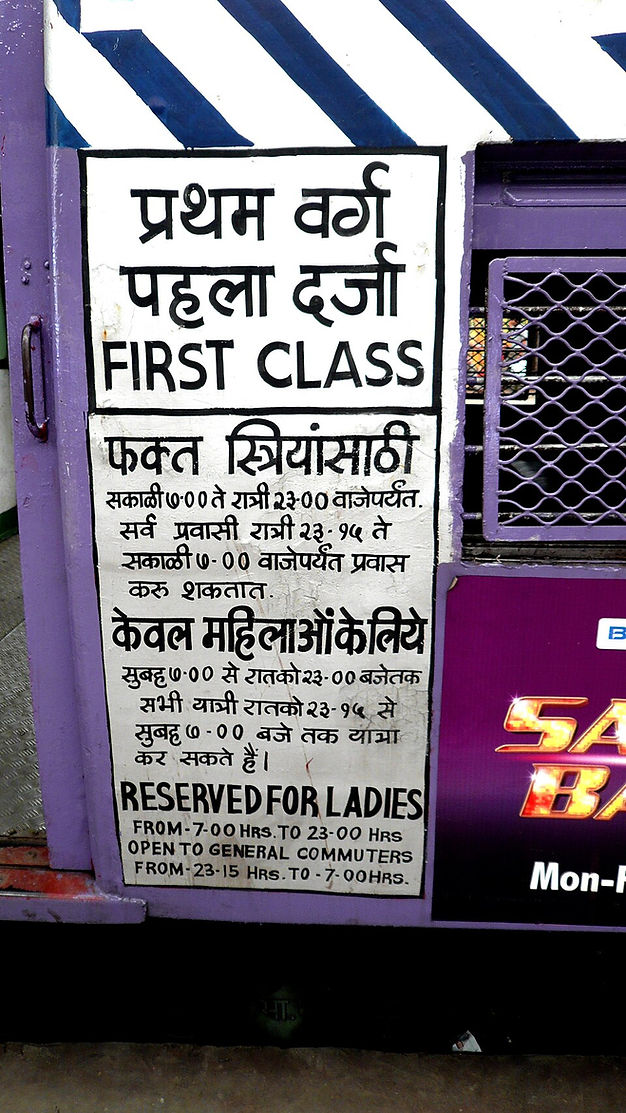
The ladies’ compartment of the local train is more than a mode of transport: it writes its own stories of resilience and rebellion, through the pressing of bodies, the chatter, the humour, and the unspoken codes! It is like a moving archive!
Thousands of women steps into this compartment, claiming their share of solidarity and security as part of their routine journeys. Imagine you are stepping into the buzz and bustle of a Mumbai local, inside the ladies’ compartment, but the station has changed from Panvel or Vashi to Hamburg in Germany, Europe!
Fascinating, right? You’ll be amazed by works of six Indian women artists who have brought this unique urban space to Hamburg, making this site of intimacy, agency, and resistance accessible to the European audience. Let’s take a closer look.

Who are the Six Women Artists?
The exhibition features artists such as Anushree Fadnavis, a famous photojournalist, Shaheen Peer, a self-taught photographer, Darshika Singh, an interdisciplinary artist, Avani Rai, a photographer and filmmaker, along with two talented visual artists Keerthana Kunnath and Krithika Sriram share the distinct South Asian experience with the audiences in Europe. Anushree Fadnavis and Shaheen Peer anchor this extraordinary visual project that tells stories of contrasting geographies, while recognizing its global relevance. Their stunning works turn a familiar train compartment into a metaphor of identity, a space of freedom, and collective voices.
Stories of Intimacy Crafted into Everyday Travels

The ladies’ compartment cultivates the stories of co-existence, unfolding intimate moments and memories of the everyday commuters, amidst the sound of lullabies sung to soothe a restless child, or shared snacks passed across stranger-turned-confidantes. The sense of closeness without any given identity is difficult to find in any other public spaces! These talented women artists have carefully captured these moments into their artworks, emphasizing connection.
In her #traindiaries, Anushree Fadnavis captures the gestures that we often take for granted. Her photo images showcase these fleeting but profound moments, like empty spaces filled by sleeping women, quiet smiles exchanged between commuters, and a comforting hand on a shoulder during a crowded ride. The city of Hamburg encounters this silent communion and a sort of tenderness in a setting that may otherwise breed unrest and chaos.
The intimacy is palpable with the rustle of sarees, fragrance of jasmine, sound of metal wheels, and whispered conversations, that override the myth of urban alienation. The metro city embraces chaos with a sense of familiarity and solidarity that exist even among strangers. This is the picture of the compartment that these female artists carry across continents.
Claiming Agency: Women Seeking Personal Space in Public Transport

Claiming personal spaces in public vehicles can be both a conquest and a concession. The compartment offering safety and visibility makes room for these women who deserve their own space in a city that often pushes them to a point of struggle.
The exhibition celebrates this spirit of claiming agency, a tale of physical and emotional space through installation, photography, and visual narratives.
With her mixed media installations, Shaheen Peer explores the story of a contested space where women find a safe place to shield themselves from the city’s hustles, creating a cozy corner of their own. In one of her sculptural portraits, she shows a lady sitting with her back to the camera, just to omit the faces, with a purpose. She wants to capture her posture, her reflection, rather than her identity. Peer uses soundscapes of railway announcements and fragments of conversations that remind the viewers that this claiming of space often stems from survival needs.
According to her, ‘Most of what we see today is concerned with who is in the photograph, not what it’s about,’ and she goes on explaining, ‘Without the face, the viewer’s attention turns toward what I find more meaningful: memory, material, narrative and the interplay of colour, form, texture.’
Avani Rai, a photographer and filmmaker, captures the women of Gurdaspur speaking of rural life and the ancestral heritage, without objectifying these women of Punjab.
It seems that the agency and struggle go beyond the geography of India, and emerge as a universal struggle whether in Mumbai, Hong Kong, New York, or the streets of Berlin. The compartment represents all the merging, underrepresented voices willing to get heard.
Resistance: Defying the Status Quo and Challenging Social Constructs
Beyond intimacy and agency there lies the theme of resistance. Defiance is shown in works of Keerthana Kunnath, whose bold portraits of female bodybuilders showcase a muscular femininity, working as a symbol of rebellion challenging the patriarchal notion of feminine beauty. The powerful installations show resistance in motion—to show how struggles persist with a sense of solidarity. It also tries to prove that strength and softness can co-exist peacefully.

Krithika Sriram uses rose petal pigments as a medium for her images, to create a natural overlay that fades over time. In her ‘Kuvalai Anthotypes,’ she creates a self-portrait with those plant-based dyes to show how memory works as fragile and shifting. By making self-portraits that vanish, she questions permanence in identity and memory in everyday life. This is particularly aimed at Dalit women who were forbidden to touch that specific flower, which is related to purity and beauty, and the fading overlays show the disappearing narratives of the underrepresented mass.
Krithika Sriram says: – ‘It comes from someone looking at their own history with agency.’
Darshika Singh’s video ‘In a Single Thought’ meditates on the invisible labour of women. The rhythm of domestic work comes as a repetitive metaphor like the speed and the motion of the wheels. The rhythm, the gesture brings a poetic gravity in her presentation.
‘Society’s expectation of productivity in women has a lot to do with how women’s labour is made invisible,’ she says.
The compartment and the sound of wheels carry countless acts of rebellion written every day.
Why Hamburg? Global Resonance of a Local Story
At first glance, it may seem that Mumbai’s ladies’ compartment can be an exhibit at the Galerie Melike Bilir in Hamburg! Isn’t it too specific, too rooted in local culture? But the artists have intended otherwise. They transport the stories to Hamburg, crossing borders, to set a common dialogue on gender, space, and resilience across societies.
They want to remind the viewers in Hamburg of a human condition that is not confined to one culture, to show how women navigate and contest public spaces all over the world. For any German woman, it may be relevant to travel by buses, trams, or bike lanes where women negotiate similar dynamics of vulnerability and defiance. The compartment thus becomes a symbol of shared discourses.
Galerie Melike Bilir, Hamburg, Captures a Journey That Crosses Borders

The exhibition at Galerie Melike Bilir in Hamburg, featuring six contemporary women artists, can be treated as a work of translation, turning a train carriage into a universal language of intimacy, agency, and resistance. The stories travel to the heart of Europe to show how women carve out spaces for themselves amidst chaos and anarchy, even in the most crowded corners of cities.